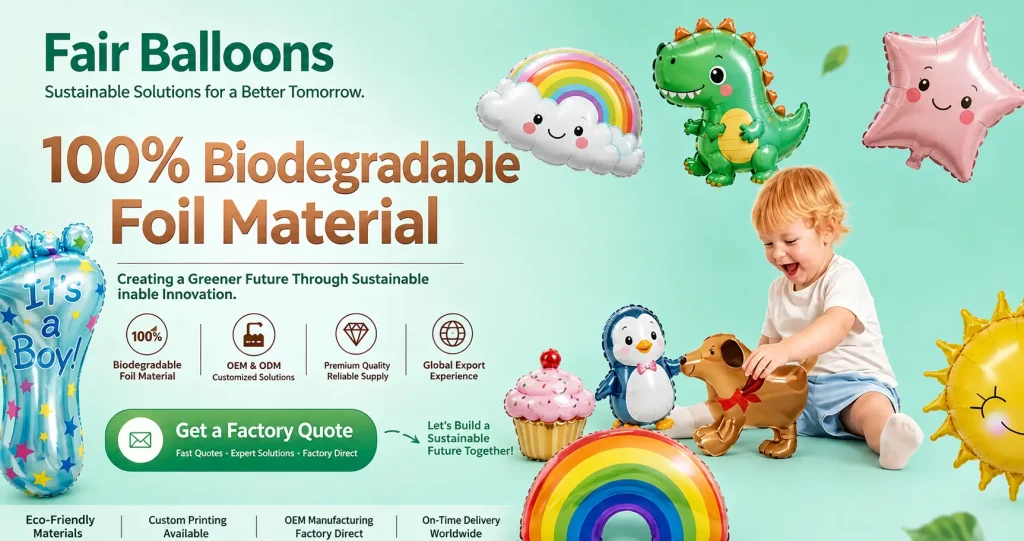
At FAIR, we believe every joyful celebration should leave our shared planet pure and beautiful. For years, traditional synthetic Mylar materials have accumulated in fragile ecosystems, leaving lasting plastic footprints. Driven by a deep responsibility to protect our global home and shield marine life from waste, we dedicated our entire scientific framework to a single green vision.
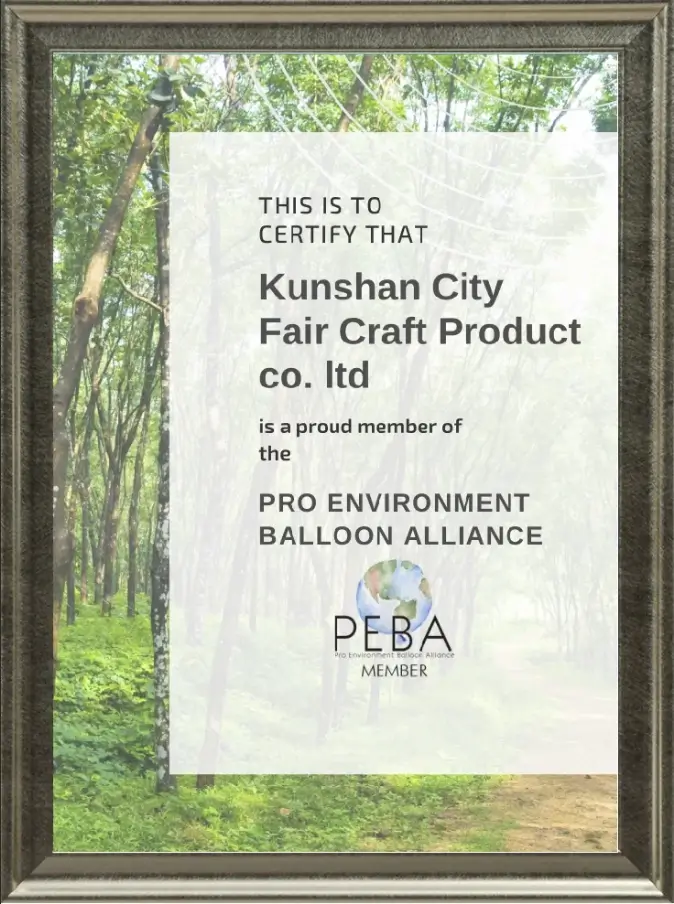
* Together as proud PEBA alliance members, we transform festive memories into a clean, carbon-neutral tomorrow for future generations.
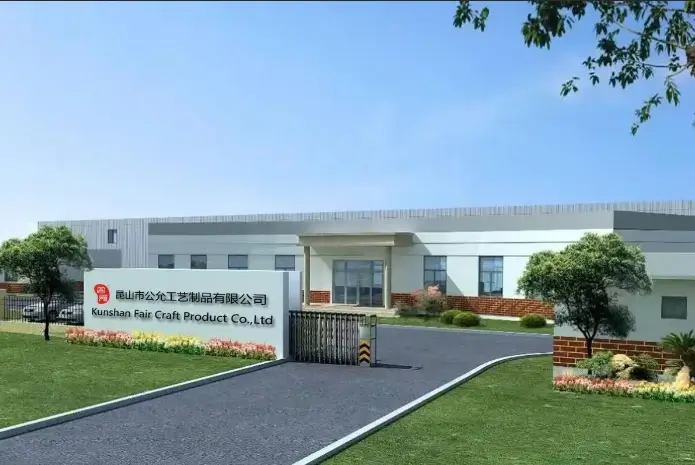
Established in 2007 with 5 million RMB registered capital, FAIR (Kunshan Fair Craft Product Co., Ltd.) is a pioneering direct-source China manufacturer integrating custom design, factory wholesale, and mass production of premium Nylon (PA), Polyester (PET), Laser Metallized, and high-barrier raw materials for global foil balloons procurement corridors.
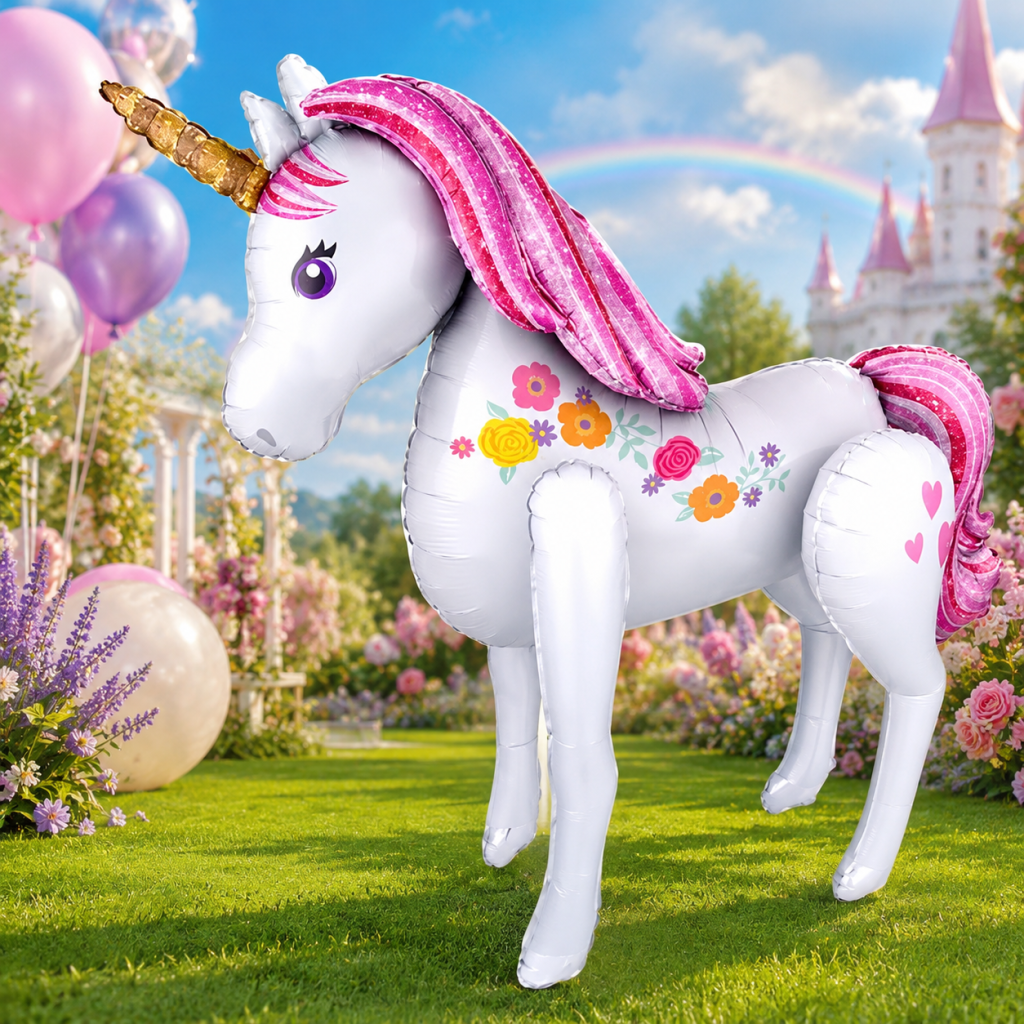
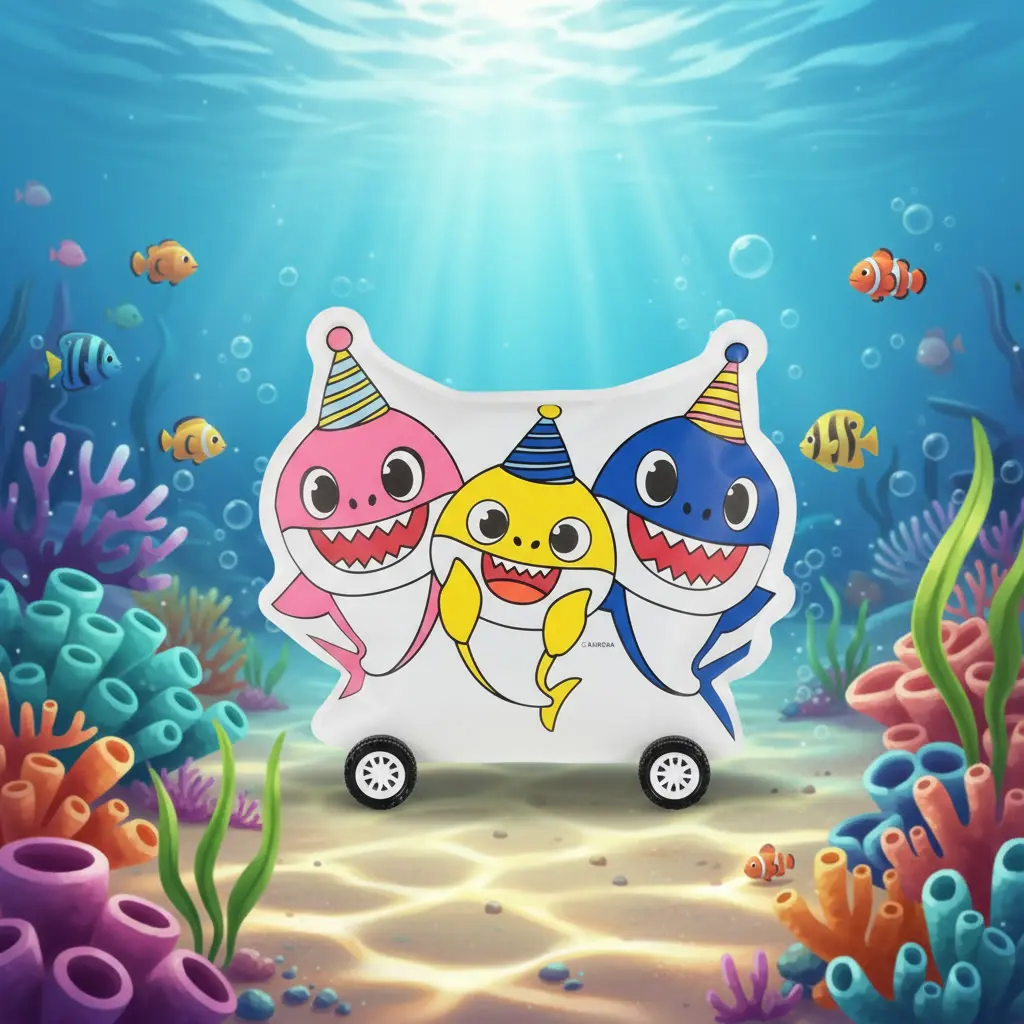
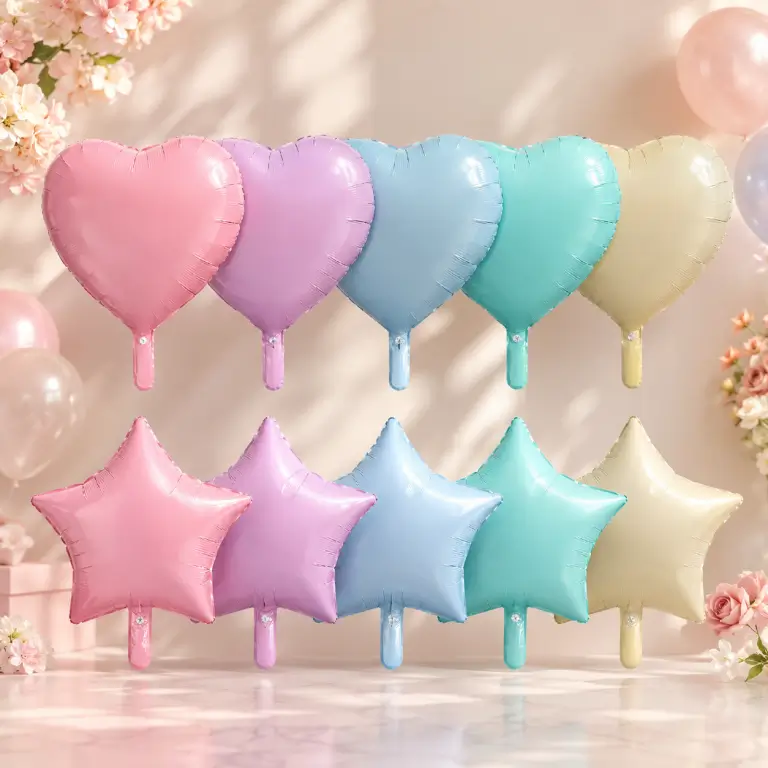
Our ISO-certified facility delivers competitive factory-direct pricing across high-demand B2B lines, specializing in high-gloss custom advertising balloons, shiny Mylar foil balloons wholesale, patented smart automatic self-inflating novelties, shaped cartoon characters, compliant biodegradable balloons, festive party balloons, leak-free helium balloons, and complete metallic alphabets and numbers templates.
π Driven by reliable quality control and legal IP protection, FAIR smoothly exports large-volume OEM/ODM container contracts to major retail distribution chains across Europe, North America, the Middle East, and Central-South Asia, building an uncompromised global reputation.
Why can’t shaped balloons be quoted directly? Why can’t design files go straight to tooling? Source factory reveals standard 6-step custom shaped mylar balloon OEM process: from design specs, handmade prototyping, mold making to mass production. Essential guide for B2B buyers to avoid costly mistakes.
What gas is safest for foil balloons? Hydrogen vs helium: why hydrogen is a global balloon killer. Deep dive into helium’s inert, non-flammable properties vs hydrogen’s explosive danger. B2B procurement compliance guide to avoid liability. CE/SGS certified. Essential reading for event planners and retailers.
Foil balloon printing methods compared: gravure, screen, UV, heat transfer β color saturation, registration accuracy, durability, MOQ & cost differences. Source factory guide for B2B buyers to choose the right printing process, avoid color deviation and fading risks. Pantone ΞEβ€1.0 standard.
Foil balloon air leakage causes and prevention: 5 root causes explained β valve damage, substrate pinholes, ink solvent residue, insufficient inflation pressure, temperature fluctuation. Source factory full-chain leak prevention from raw material to 100% full inspection. B2B buyers eliminate complaints.
Commercial balloon decorations guide: visual design & bulk procurement for B2B buyers. Aluminum foil vs latex comparison, application scenarios, EU CE/RoHS compliance. Source factory direct supply for event planners, procurement managers & brand owners.
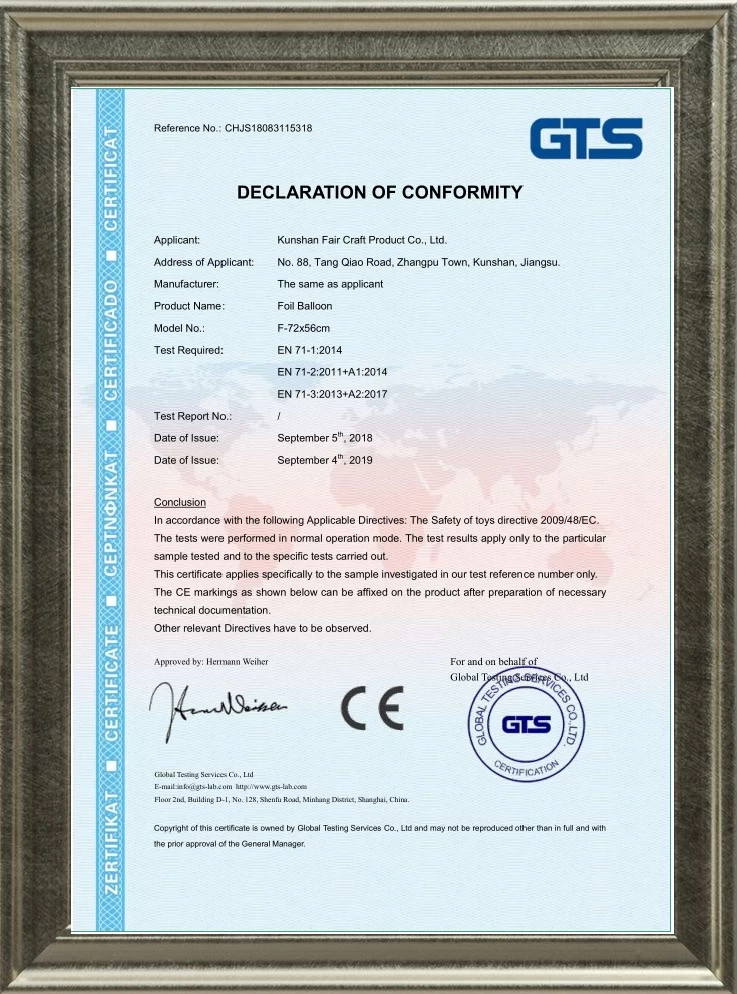
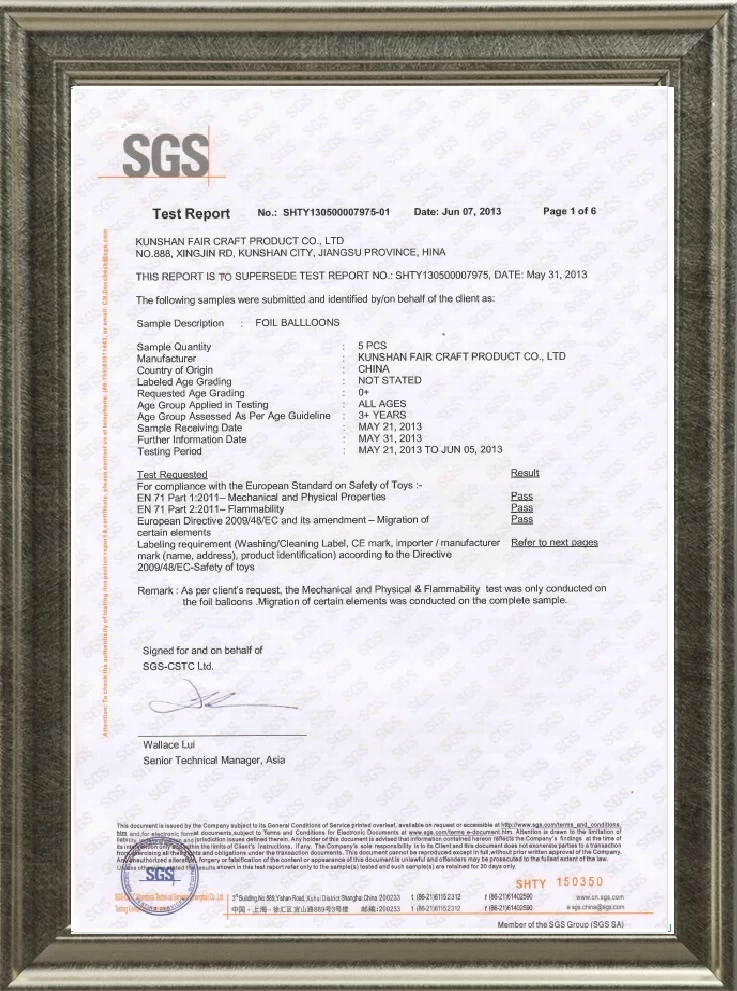
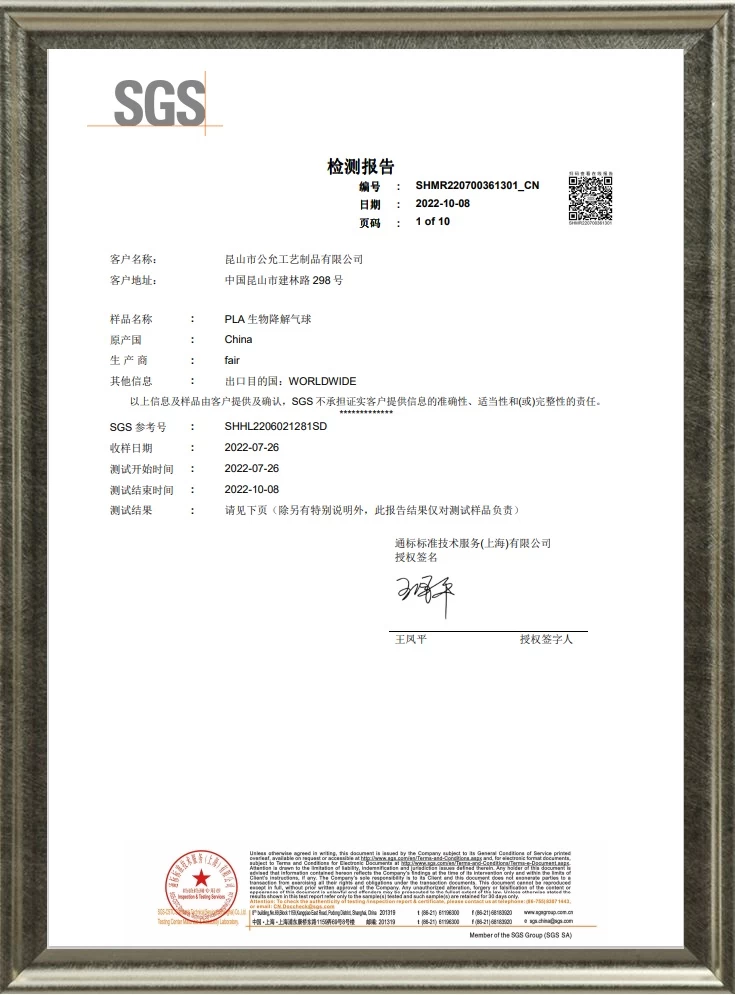
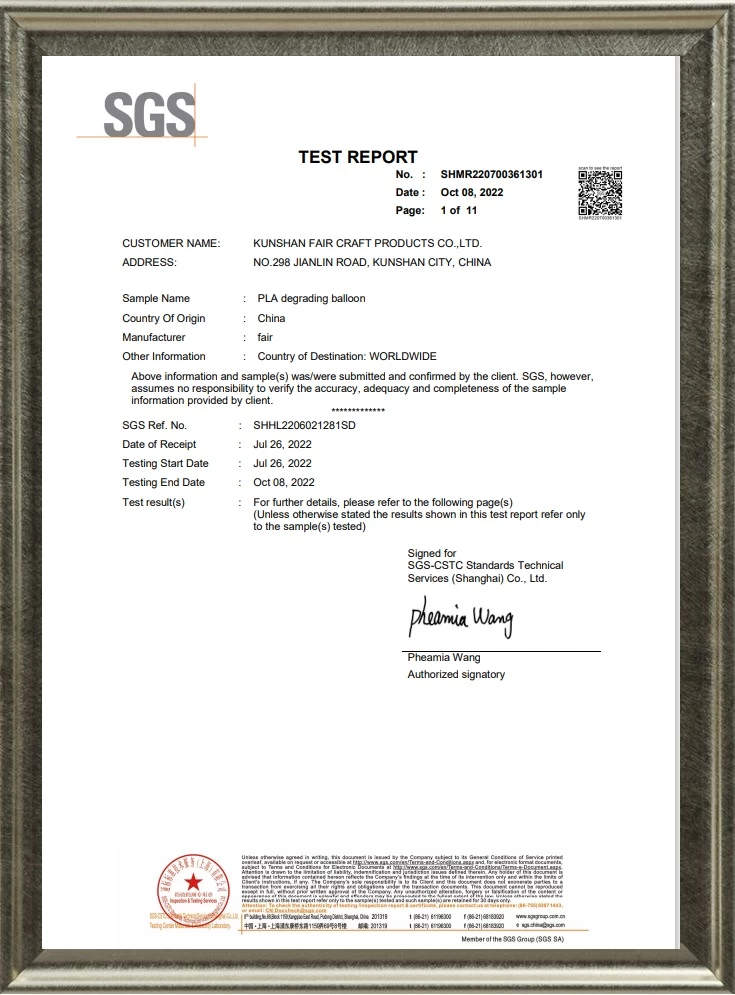
Biodegradable foil balloon manufacturer guide: 3 core advantages explained β industrial composting full biodegradation test, 15-day helium retention, burst-resistant physical properties. Source factory provides CE/RoHS/EN71/SGS full compliance documentation for EU green trade barriers.
Kunshan Fair Craft fully discloses the complete B2B manufacturing process of foil Mylar balloons bulk. From order review, 3D inflation compensation, and custom tooling, to rotogravure printing, automatic valve lamination, 100% leak testing, and global DDP delivery.
https://www.foilballoon.cn/news/foil-balloons-mylar-balloons/
Custom advertising balloons OEM guide: commercial brand promotion scenarios, one-stop customization process from design to global delivery. Source factory 15-25 working days lead time, low MOQ flexible customization, Amazon FBA packaging support. CE/RoHS/EN71 certified.
Established in 2007 with a registered capital of 5 million RMB, FAIR compiles the definitive, search-optimized answers regarding helium economics, raw polymer lamination, inflation thermodynamics, and global import compliance.
A premium, professionally manufactured foil balloon (specifically an 18-inch standard size) filled with high-purity helium typically floats for 5 to 7 days under stable indoor temperatures (18°C to 24°C). Larger jumbo sizes, such as our 34-inch and 40-inch commercial numbers and alphabets, hold a much larger volume of helium relative to their surface area, allowing them to remain buoyant for up to several weeks.
This performance represents a massive technical upgrade over standard natural rubber latex balloons, which are highly porous at the molecular level and allow helium atoms to leak rapidly, typically sinking within 8 to 12 hours. FAIR's advanced Nylon (PA) laminated composite film restricts gas transmission rates (GTR) to a microscopic fraction, ensuring your celebratory displays look immaculate throughout multi-day corporate promotions and luxury wedding receptions.
π Learn more: Explore our Mylar vs Latex Balloons: The Complete Comparison, check the Biodegradable Foil Balloons vs Latex: B2B Sourcing Guide, or review Foil Balloon FAQ Q2 and Q16 for comprehensive material specifications.
If a newly inflated foil balloon refuses to float despite being filled with pure helium, it is almost always due to an unbalanced payload-to-volume ratio. In physics, floating requires the weight of the displaced air to be greater than the total weight of the balloon membrane, self-sealing valve, internal accessories (such as LED modules), and the helium gas combined.
Many consumers and novice decorators purchase balloons that are too smallβspecifically under 18 inches in diameterβor designs with highly complex, irregular geometries (such as thin, long limbs on shaped cartoon characters). These structures do not hold a sufficient volume of helium to overcome the physical deadweight of the inelastic polymer composite film. At FAIR, our engineering team uses advanced 3D CAD stress and volumetric flow software to optimize the weight-to-lift profile on all custom shaped Mylar balloons, ensuring every standard catalog item is guaranteed to float vertically with zero tilting.
π Learn more: Study our specialized Why is My Foil Balloon Not Floating with Helium Guide and check Foil Balloon FAQ Q10 regarding insufficient lifting capacity.
Yes, high-quality Mylar foil balloons are fully reusable. Unlike latex balloons, which undergo irreversible plastic deformation and degradation upon inflation, foil balloons are constructed from robust, inelastic laminated films that can be deflated, stored flat, and reinflated multiple times without structural failure or losing their high-gloss metallic finish.
This reusability is enabled by our integrated, high-frequency welded one-way self-sealing valve system. To safely deflate a balloon, simply slide a standard, clean drinking straw (approx. 15-20cm in length) through the valve opening until you pass the inner pressure flap and hear the gas hiss. Gently apply even pressure across the balloon envelope to expel the remaining helium, fold the membrane flat without sharp creasing, and store in a cool, dry, dark environment. This flat-pack storage capability offers massive cost savings and visual merchandising flexibility for corporate retail chains running seasonal campaigns throughout the fiscal year.
π Learn more: Read our Foil Balloon Self-Sealing Valve Design & Technology Guide and review Foil Balloon FAQ Q9 for detailed deflation and storage steps. Therefore, reusable foil balloons can significantly cut your inventory costs. Contact our B2B team today to get a bulk wholesale quote.
For consumers and small-scale event organizers who do not have access to an electric air pump or a commercial helium regulator, inflating a foil balloon manually using a standard drinking straw is an exceptionally simple and safe procedure:
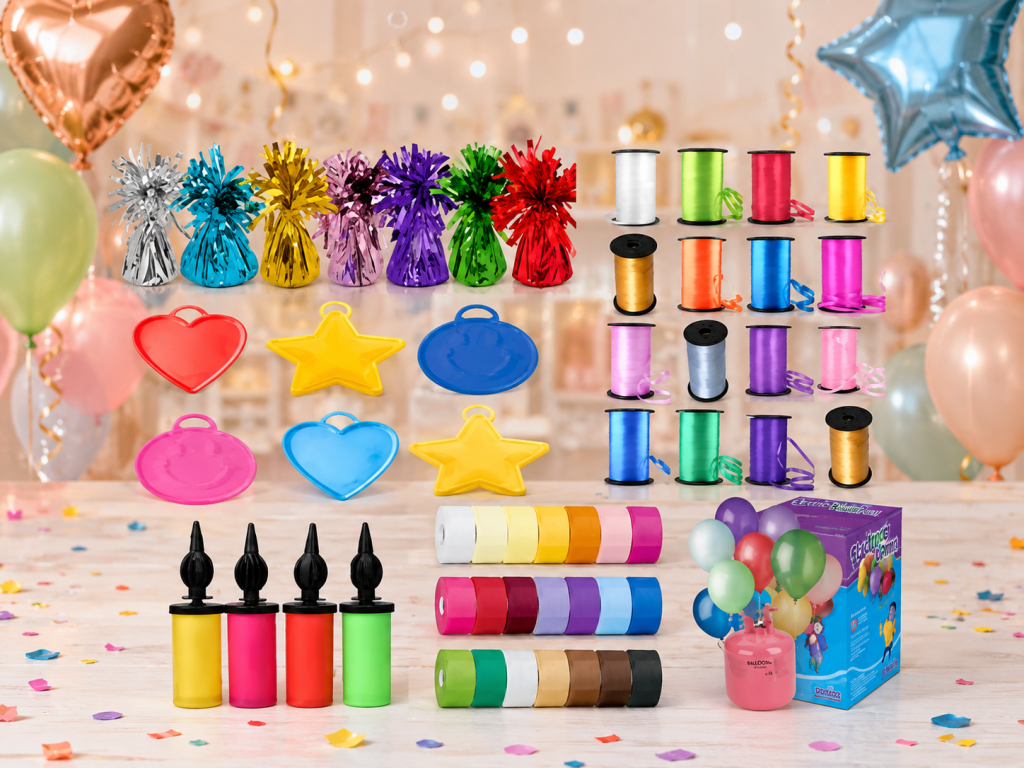
π Learn more: Study our Balloon Accessories Procurement Manual for direct-factory inflation tools, straws, and sticks.
When helium-filled foil balloons are exposed to cold temperaturesβsuch as transporting them outdoors during winter or placing them in heavily air-conditioned retail venuesβthey will suddenly shrink, wrinkle, and lose their buoyancy. This is not a product defect or a sign of a gas leak; it is a harmless physical phenomenon governed by the Ideal Gas Law.
Under the thermodynamic principle of Charles's Law, gas volume is directly proportional to its absolute temperature. When temperature drops, the kinetic energy of the helium atoms decreases, causing them to crowd closer together. This thermal contraction reduces the internal gas volume and pressure, making the inelastic balloon envelope appear soft and deflated. As soon as the balloons are brought back into a warm, room-temperature environment, the helium atoms regain kinetic energy, expand back to their original volume, and instantly restore the balloon to its taut, high-gloss, floating glory.
π Learn more: Read our research on Helium Retention & Gas Behavior Under Temperature Fluctuations.
Unlike rubber latex balloons, which possess outstanding isotropic elasticity and can stretch to accommodate rising internal pressure, the metallized polymer substrates used in foil balloons are fundamentally inelastic. They have a very rigid structural limit and virtually zero stretch capacity.
When a foil balloon is subjected to heatβsuch as being left in a locked car under direct sunlight, or deployed outdoors during summerβthe helium atoms inside absorb thermal energy, rapidly expand, and increase internal pressure. Since the clear Nylon or Polyester envelope cannot stretch to expand its physical volume, the rising pressure exerts immense tensile stress directly onto the heat-welded seams. Once this force exceeds the burst threshold, the balloon's welded borders will instantly rupture, popping with a loud bang. To prevent this, FAIR recommends inflating foil balloons to only 90% to 95% capacity when deploying them in high-temperature environments, leaving a safe thermal headroom for gas expansion.
π Learn more: Check the physical tests in our Can You Leave Foil Balloons in a Hot Car: Safety & Durability Study and Seam Stress and Burst Prevention Guide.
Absolutely! You can easily inflate any foil balloon with standard atmospheric air using a manual hand pump, an electric balloon inflator, or a simple straw.
However, keep in mind that air-filled foil balloons will not float. Helium is significantly lighter than air, which provides the necessary upward buoyancy. Regular air consists of heavier nitrogen and oxygen molecules, meaning the balloon will remain stationary. Air-filled balloons have a massive advantage, however: because nitrogen and oxygen molecules are much larger than tiny helium atoms, they diffuse through the polymer membrane at an incredibly slow rate. An air-filled foil balloon can remain fully inflated, taut, and visually flawless for up to several weeks or even months. This makes air-inflation the preferred choice for indoor balloon arches, vertical tabletop displays, hanging backdrops, and balloon cup stick installations.
π Learn more: Review Foil Balloon FAQ Q8 and study our Air-Filled Foil Balloon Wall & Backdrop Installation Guide.
When choosing between natural rubber latex and metallized foil balloons for commercial procurement, B2B buyers must analyze several core distinctions:
π Learn more: Study the Mylar vs Latex Balloons: The Complete Comparison, read the Biodegradable Foil Balloons vs Latex: B2B Sourcing Guide, or review Foil Balloon FAQ Q2 and Q16.
Yes, traditional Mylar foil balloons present a serious safety risk if released outdoors because their metallic aluminum coating is highly conductive to electricity.
If a loose, helium-filled foil balloon escapes and floats into overhead power distribution lines, it can bridge the electrical gap between two energized power phases or between an active wire and the ground. This triggers a powerful short circuit, resulting in spectacular electrical explosions, melting high-voltage lines, damaging transformers, and causing widespread neighborhood power outages or catastrophic wildfires. Because of these serious safety hazards, many countries and US states (such as California) have enacted strict laws prohibiting the release of foil balloons outdoors, requiring all helium balloons to be securely tethered with individual high-density balloon weights.
π Learn more: Study the Helium Safety, Electric Hazards & Regulatory Compliance Handbook and check Foil Balloon FAQ Q18 regarding power line protocols.
π‘ Pro Tip: To eliminate this legal liability completely while still achieving beautiful night sky decorations, explore our revolutionary, patented Helium LED Lantern Balloons featuring our 500-Meter Smart Auto-Descent system that safely forces balloons back to earth within your predetermined event perimeter!
Consolidate your traditional Mylar and innovative eco-friendly balloon procurement directly at the manufacturing source. Request our complete corporate catalog, SGS test certification logs, or container pricing matrix.
LinksοΌbiodegradable balloons
WhatsApp us